Let’s talk about scaling ReOps workflows for UX research with families
UX research projects with minors, teens, and family groups are just as valuable as any other. From gaming platforms and learning apps to social networks and beyond, their behaviors increasingly shape how products are designed, tested, and shipped.
These studies introduce complex logistical, legal, ethical, and emotional challenges to your ops workflow. You’re not just managing a single participant—you’re coordinating parents, children, and sometimes other household members, each with distinct roles. Invitations must reach the right participant, parents must approve sessions, compensation has to go to the correct household member, and caregivers may need visibility into communications, scheduling, or incentives when minors are involved.
One missed consent form, a scheduling hiccup, or a misdirected email can derail the entire study or even invalidate the data. We get it—managing all of this manually is tedious, time-consuming, error-prone, and loaded with compliance risks. Whether you’re on a high-growth product team, a government agency, or a Fortune 500 company, Ethnio already helps teams manage participant approvals and recruitment at scale.
Now, with our Groups feature, research with families gets radically simpler. Gather consent from one member, schedule another, and pay the correct participant—all while keeping approvals, communications, and workflows streamlined. It’s designed to save time, reduce headaches, and keep your ops running smoothly from start to finish.
A powerful model for researching families: groups
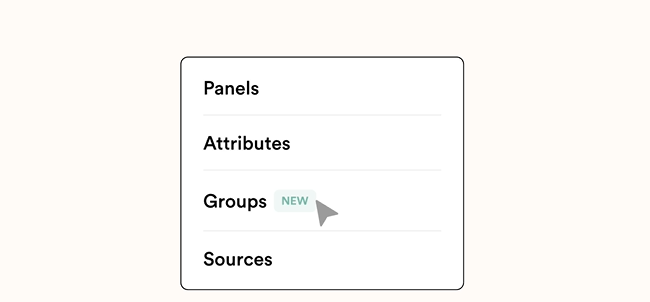
At its core, Ethnio Groups is a data structure that lets you email, track, schedule, and pay groups of participants at scale while navigating layers of permissions.
If your participants are organized into groups with multiple roles, chances are you might be doing a lot of work already juggling.
Say your participants are part of a family or dependent group, one adult provides consent, another might need visibility into scheduling or communications, while the minor is the actual participant. That’s alot you that you need to contact just to potentially recruit your ideal research participant. Or maybe your research involves siblings, households, or multi-guardian arrangements, where every update—session invites, reminders, and incentive details—where you need to CC multiple members of the group with all your research communication and needs to reach the right adults at the right time.
As these relationships stack up, recruiting becomes the hardest variable to control, and can create one of the most complex recruitment chains.
Managing consent, communication, scheduling, and incentives across connected participants can quickly become overwhelming and error-prone. Ethical responsibilities remain critical: research with minors requires age-appropriate methods, clear opt-out paths, and safeguards to ensure children feel safe and willing to participate. Guardians must understand exactly what they are approving, and researchers need confidence that every step is tracked in one centralized workflow.
This is one of the biggest challenges our customers face—how crazy complicated it can be to properly email, track, and pay groups of families for research.
Let’s get into how this new data structure simplifies the complicated process of properly emailing, tracking, and paying groups for UX research.
Panels vs Groups
Wait… aren’t Groups and Panels the same thing? A panel is a group of people. A group is a group of people. So what the $@f?
The key difference lies in the family roles and properties.
Let’s start with any research where you have to go through parents or guardians to schedule participants. Imagine a hotel running a study to improve family travel experiences for future bookings. Their goal is simple: make sure parents, teens, and kids all have a fantastic guest journey—from check-in to in-room activities to loyalty programs. To make that happen, they need to recruit families who have stayed at the resort before, covering every household member.
A teen might be excited to participate, but parental consent comes first. Once consent is secured, the teen can be scheduled as the participant, while parents and other guardians stay in the loop for all communications, scheduling, and incentives.
You might create a group called “Lee family” and then set up these properties and roles:

This lets you have easy email shortcuts to email the parents for scheduling and logistics, but still get the actual interview scheduled and compensation sent to the teen.
With Ethnio Groups, you can structure outreach to match real-world hierarchies.
Define the roles and relationships between all members involved, which allows you to better track and manage consent across multiple levels as you move through your recruitment funnel towards your potential participants.
✅Parents/guardians approve outreach and grant consent first
✅Teens receive research invites at the right time
✅ Other caregivers or family members can track approvals and scheduling seamlessly
Voila!
When to use Groups for UX research with families
Scenario 1: Research involving minors
Any study that includes children requires verifiable parental or guardian consent, child assent where appropriate, and clear documentation. Groups ensures these steps are followed in the correct order and are easy to review later.
Scenario 2: Multiple caregivers
In families with more than one caregiver, Groups allows you to include all relevant adults, copy them appropriately on communications, and avoid confusion or misalignment.
Scenario 3: Longitudinal family studies
For studies that span weeks or months, maintaining accurate records of consent, participation history, and communication becomes essential. Groups keeps this information connected and up to date over time.
Scenario 4: Engaging Multiple Family Members at Different Stages
Some studies require interacting with different family members at separate stages—for example, a parent approves a teen’s participation, while a sibling provides feedback later. Groups ensures each participant is contacted at the right time, avoiding missed steps or scheduling conflicts.
Scenario 5: Navigating Family Gatekeepers
When research requires approval from secondary caregivers, legal guardians, or other family representatives, Groups tracks all approvals at scale. Researchers gain visibility over every consent and can ensure no participant or required approval is overlooked.
Coolest parts of groups for UX research with families
The ability to CC specific roles, track them by each group, and schedule and pay the people who participated in research -who may not have been the role you originally emailed about the study- is VERY unique to Ethnio.
No more bottlenecks to:
Group emailing by family role - CCing the right people in the same family across many families and many family members. There are almost no tools in the world that let you email thousands of families with the parent or caretaker in the To field and the teen in the CC field, making sure each family ID is unique, and keeping that family together from study invite to scheduling to incentives
Email personalization by family role at massive scale - if you want the body of the email to reference the parents names of potential participants and also the teenagers names, that all NEEDS to be correct for every single group, emailed at the same time. Imagine if you have 3 customers: IBM, Coca Cola, and the IRS, and the email says “Hi {Marketing Coordinator} at {Coca Cola},” it would be bad if that said {IBM}.
Easily track family member participation over time - meaning you can see for any minor participant, the family they belong to, and see the study and consent history.
Filtering on family roles or properties - if you want to see what studies the parents have participated in compared to what studies the children have participated in, that’s easy with filters.
Securely import families from many sources like a native Qualtrics integration, Google Sheets, CSV, XLSX, or via API.
Integrations with key tools like Slack, Zoom, Google Calendar, and Qualtrics. You can receive real-time alerts for screener responses in Slack, schedule video sessions via Zoom, and sync group schedules with your calendar, all while maintaining privacy compliance through GDPR and CCPA automation.
Reporting & metrics - any studies with families are part of the customizable Ethnio reports.
Localization and international support - all group communication can be in any language and all incentives can be in any currency.
How can Groups help UX research with families in action
Let’s say you’re a bank that needs to run longitudional UXR studies about how families interact with their digital bank accounts. You want to improve parental controls, payment sharing, and overall usability of family account services. The study involved hundreds of qual & quant participants, with parents aged 30–50 and their children aged 6–18 years old.
Participants can be organized into three groups in Ethnio:
Group 1: Parents who have used a family account (150)
Group 2: Parents who have not used a family account (100)
Group 3: Children aged 8–18 (50)
Parents needed to provide consent and context for their children, while children were the primary participants for usability feedback. Research questions focused on current family account usage (Google, Apple, Microsoft), feature usage (parental controls, subscriptions, payment sharing), barriers to frequent use or setup, and children’s perspectives on parental oversight and privacy. Key findings highlighted conflicts between parents’ need for control and safety and children’s desire for privacy.
Managing these consent workflows across hundreds of participants could quickly become chaotic—but Ethnio Groups simplifies the process. Who has given consent? Who is scheduled for sessions? Who still needs reminders? Ethnio Groups allows you to define each family member’s role and permissions, track approvals from parents, schedule sessions for children, and even CC additional caregivers if needed. Automated workflows ensure parents give consent before children receive an invite, all while keeping the process organized and GDPR/CCPA-compliant.
Here’s how it works in practice
Define Custom Groups: Each family is a group, with roles like Parent, Child, and Sibling.
Track Permissions and Approvals: Parents or guardians approve participation, and you can track which children are cleared to participate.
Email and Engage at Scale: Send personalized invites to parents, then automatically schedule sessions for children, ensuring no family is overlooked.
Manage Incentives Seamlessly: Whether offering gift cards, app credits, or other rewards, each family member can be compensated appropriately without manual tracking.
This structure eliminates bottlenecks such as repeated consent requests, missed approvals, or incorrectly scheduled sessions. You can filter families by criteria such as age, location, or prior participation, visualize relationships across households, and manage all communication in one interface.
For studies involving multiple children in one household or co-parent scenarios, Ethnio Groups allows you to route permissions through multiple caregivers, ensuring every child can participate safely and ethically while maintaining a professional workflow.
In short, Ethnio Groups turns what could be a complex web of consent, scheduling, and communication into a smooth, organized process, letting you focus on collecting high-quality insights from families rather than managing logistics.The power of Ethnio’s data architecture
At Ethnio, we believe in fast and easy implementation. Groups offers flexibility, scalability, and integration, helping you build a recruitment process As your team and studies grow. Ethnio Groups grows with you, providing the structure and tools to support your evolving needs. From customized participant workflows to a powerful API, Ethnio Groups gives you complete control over how you manage your recruitment efforts.
Creating families in Ethnio
With Groups, you can create custom family structures that reflect your research needs. For example:
A family group containing one or more guardians and one or more child participants
Defined roles for consent, participation, and communication
Clear relationships that persist across studies
This flexibility allows research teams to adapt to a wide range of family research scenarios while maintaining consistency and compliance.
The power of Ethnio’s data architecture
At Ethnio, we believe in fast and easy implementation. Groups offers flexibility, scalability, and integration, helping you build a recruitment process As your team and studies grow. Ethnio Groups grows with you, providing the structure and tools to support your evolving needs. From customized participant workflows to a powerful API, Ethnio Groups gives you complete control over how you manage your recruitment efforts.
You get:
Scalability: Whether you're running a small study or a large recruitment campaign
Integration: Easily sync data from other tools and databases to get a unified view of your recruitment workflow.
Time-to-Value: Get started quickly with minimal setup, integrating seamlessly into your existing processes.
By customizing the way you track approvals, communications, and workflows, Ethnio Groups makes participant recruitment and engagement more organized, efficient, and scalable. And the best part? As your needs evolve, Groups grows with you.
Ready to improve your Ops workflow?
We’re excited to see how Groups will empower research teams to run more efficient, organized, and scalable research studies. Explore Ethnio Groups today and see how it can elevate your research operations.